Tree Planting and Transplanting
Welcome to our tree establishment and relocation guide. At Northern Lakes Tree Service, we use observational science and professional rigging techniques to plant and transplant trees safely throughout North Idaho. We add young saplings to enhance your landscape. Our certified specialists also relocate mature specimens to protect residential structures. We meticulously prepare the root ball and soil conditions to ensure long-term health. Our team utilizes advanced tools and local climate data to give your new layout the best possible start. Explore our core methodology below. See how we establish vibrant, sustainable canopies across our service area.
How We Safely Plant and Transplant Trees
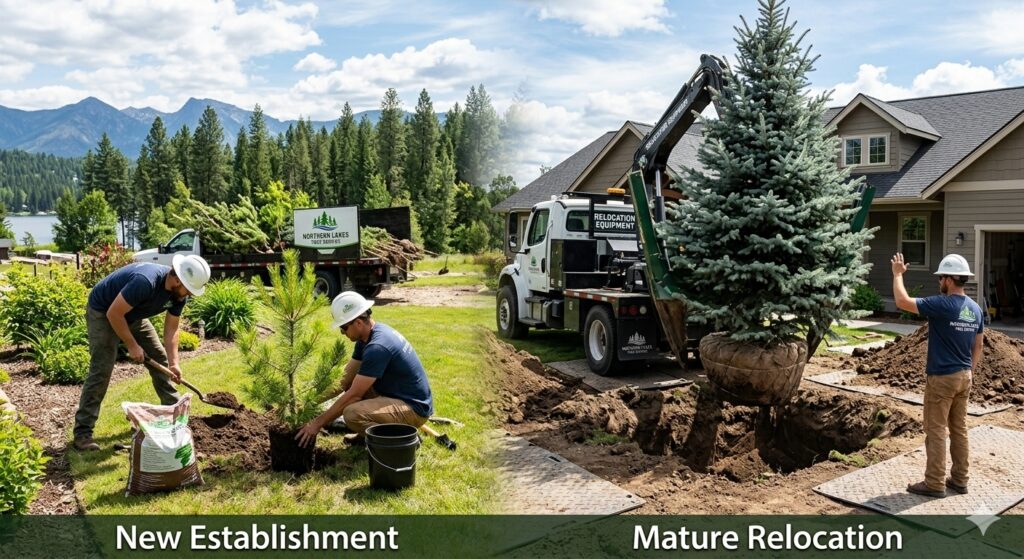
Successful tree establishment requires a deep understanding of soil mechanics and root architecture. When we plant and transplant trees, our crew evaluates critical factors like drainage, structural support wiring, and seasonal timing. These steps minimize shock. Do you want to see our heavy equipment and specialized trucks handling real installation projects? You can watch our crew in action on our videos page.
Check our detailed service area map to see if our relocation equipment can access your property. You can also explore our complete care options by reviewing our main services overview. Find native species classifications in our detailed glossary of terms. If you have immediate questions regarding survival guarantees, seasonal timing, or watering schedules, read our frequently asked questions page.
Our team takes immense pride in preserving the structural integrity of your landscape. To read feedback from local homeowners who upgraded their properties with our planting services, visit our reviews and testimonials page. The Arbor Day Foundation website hosts excellent resources on urban canopy growth, root system management, and structural planting guidelines. Visit our contact us page today to get started with our team. You can easily schedule an on-site evaluation or request an accurate project estimate.
Tree Planting
Planting trees in a residential area should be based on their capacity to cope with and adapt to the soil, sunlight, and climate at the selected site. It is not just about choosing the perfect tree to be planted but also selecting the right tree for the right place. As we all know, tree planting is the process of transplanting tree seedlings, which for most of us is for the purpose of landscaping. This is to improve the aesthetics of our yard and provide shade and fresh air in your community.
Benefits of Planting Trees
• It provides oxygen and improves air quality.
Without plants and trees, life would never exist. Trees and plants are the major providers of the oxygen we breathe. They are also considered absorbents of odors and harmful dusts through the process of filtration of pollutants out of the air by trapping them on their leaves and barks.
• It keeps your yard cool by providing shade.
The branches and leaves of trees give shade to our homes and streets. They keep their surroundings cool by releasing water vapor into the air through their leaves. Furthermore, well-placed trees can reduce your cooling costs during the summer.
• It reduces soil erosion.
Trees have a large contribution to make in reducing and avoiding the occurrence of soil erosion. Trees achieved this process by reducing storm water runoff. Through this procedure, the effects of flooding might also be reduced.
• It helps homeowners improve the aesthetics of their landscape.
Through careful planning when planting trees, aesthetic appeal will surely be achieved. Be it an ornamental tree, a fruit-bearing tree, a shade tree, or other type of tree, as long as it is properly planted and regularly maintained,
Using quality trees and following up with good tree care practices, such as watering, fertilizing, trimming, and pruning if they are poorly planted, successful growth can still not be achieved. If you are encountering some issues or troubles planting trees, call our local arborist to help you determine the right tree and the perfect location in your yard. Northern Lakes Tree Service can also work with you to transplant trees that grew in an undesirable or unideal growing spot.
Tree Transplanting
Transplanting trees is a precise process that is best completed by a tree care professional. Specialized knowledge is needed to do this job to avoid harm and ensure the survival of your tree. Many transplants die due to improper removal, selection, and installation.
We provide you with the most common questions homeowners usually ask when transplanting a tree.
1. When is the best time to transplant a tree?
In establishing tree transplants, timing and type of tree should be considered. Most deciduous trees are transplanted during their dormant season, when leaves are off the tree (early spring or early fall). For most trees and shrubs, late winter or early spring are the best times for transplanting. For the second-best time, you should consider falling.
2. What should we do after tree transplanting?
The best thing to do after transplanting a tree is to manage watering religiously. A newly transplanted tree might experience root damage that causes its root system to get weak enough to handle drought and excess water stresses. To ensure the survival and development of your tree and its root, keep the soil evenly moist throughout its entire growing season.
The "do-it-yourself" approach to transplanting is only recommended for small trees. Hiring a professional tree specialist is highly recommended for larger ones. For tree planting and transplanting in Northern Lakes areas such as North Idaho, Eastern Washington, and other nearby locations, call Northern Lakes Tree Service. Rest assured that safe, high-quality, and professional tree services will be delivered. Give us a call today for a free estimate.