
Winter Is Coming! So Is Northern Lakes Trees Services
Winter Tree Pruning: Why It’s the Best Time for Maintenance
While the winter months bring freezing temperatures and snow, they also provide the perfect conditions for professional tree care. Rather than viewing winter as a time to pause maintenance, property owners should recognize that winter tree pruning is a critical strategic advantage for the long-term health of your landscape.
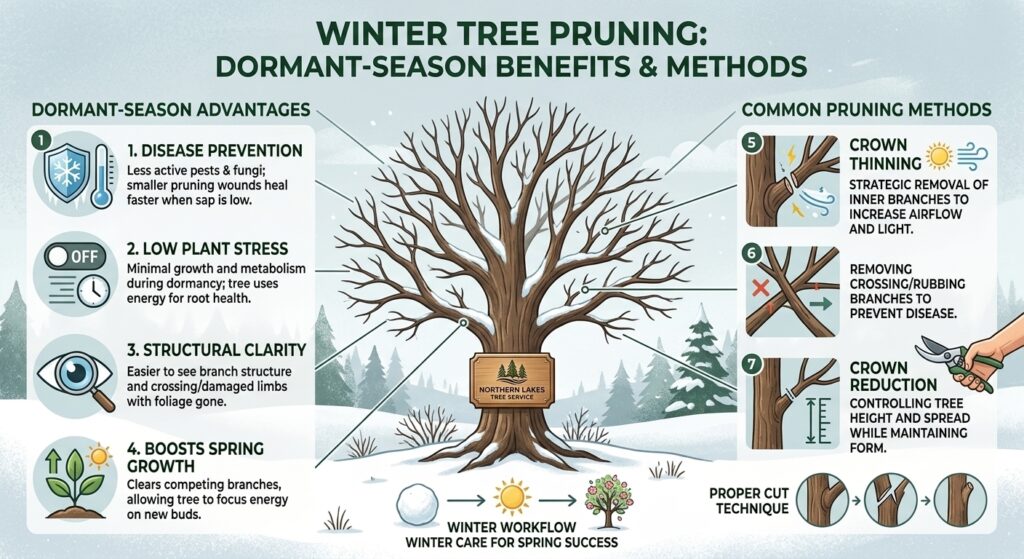
The Benefits of Winter Tree Pruning
When trees enter dormancy—the plant equivalent of hibernation—their metabolic processes slow down significantly. Because the tree is not actively growing, it is less susceptible to the stress of pruning.
Key advantages of dormant-season pruning include:
-
Disease Prevention: Many pathogens and insect populations are inactive during the winter, significantly reducing the risk of infection at pruning sites.
-
Structural Clarity: Without the obstruction of foliage, our arborists can clearly see the tree’s branch structure. This allows for precise, clean cuts that promote better form and stability.
-
Enhanced Spring Growth: By removing dead, damaged, or crossing branches during the winter, you clear the way for the tree to direct its energy toward vigorous, healthy growth as soon as spring arrives.
-
Improved Airflow & Light: Targeted thinning during the winter months allows sunlight and air to reach the center of the canopy, which helps prevent future fungal issues.
Professional Structural Care
Professional winter tree pruning is more than just removing dead wood. It is a precise process designed to train the tree for a lifetime of health. Our process focuses on:
-
Removing Hazards: Clearing away dead or weak branches that could fail under the weight of snow or ice.
-
Corrective Cuts: Identifying crossing or rubbing branches and removing the smaller ones to improve structural integrity.
-
Canopy Optimization: Thinning the inner branches to improve airflow, which creates a stronger, more wind-resistant tree.
Trees provide immense value to your property, but they require proper stewardship to survive and thrive. If you are ready to prepare your landscape for a vibrant spring, contact our team for a professional assessment. For more tips on seasonal maintenance, you can also explore the University of Minnesota’s pruning guide.