
How Mulching Can Help Trees
Mulching Can Help Trees Thrive: A Guide to Proper Application
Climate variability and seasonal shifts significantly impact your landscape. During the dormant winter months, trees require extra support to protect their root systems from temperature fluctuations and moisture loss. One of the most effective ways to ensure your trees remain resilient is through proper mulching.
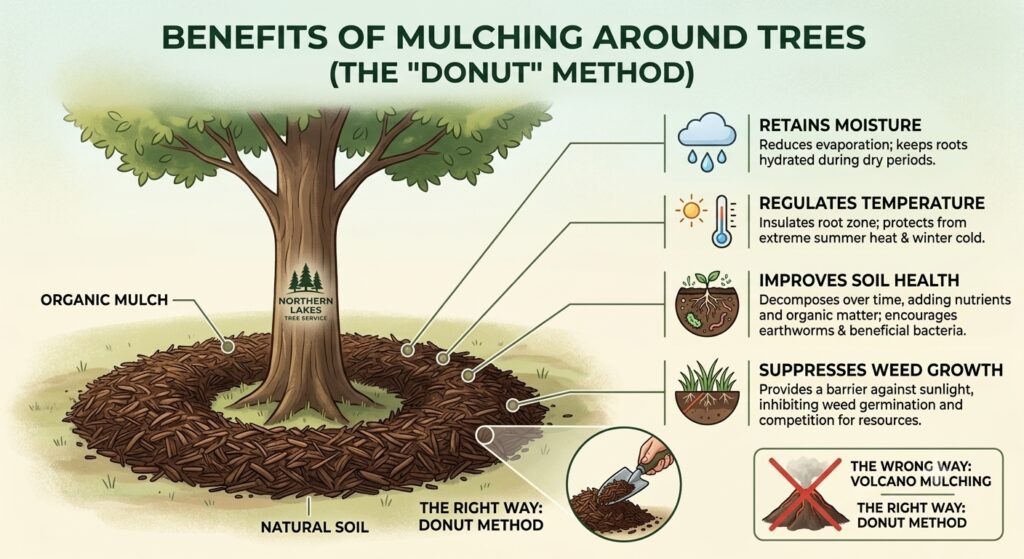
Why Mulching Can Help Trees
Mulch is a protective layer of organic material spread across the soil surface around the base of a tree. Far from just an aesthetic choice, mulching can help trees by:
-
Conserving Moisture: It reduces evaporation, keeping the root zone hydrated.
-
Improving Soil Health: As organic mulch decomposes, it adds nutrients to the soil and improves its texture.
-
Preventing Erosion & Compaction: It acts as a buffer against heavy rain and high-foot traffic.
-
Regulating Temperature: It keeps the soil cooler in the summer and provides a protective layer against freezing temperatures in the winter.
-
Supporting Soil Life: It creates a healthy environment for earthworms and beneficial microorganisms.
Choosing the Right Mulch
When selecting materials, prioritize those that will provide nutrient-rich humus as they break down. A medium-textured mulch is generally the best choice; coarse materials may be too porous to hold moisture, while fine materials can sometimes inhibit air exchange. Consider locally available options such as:
-
Organic Materials: Shredded leaves, wood chips, pine needles, straw, or aged compost.
-
Texture: Aim for a balance that allows the soil to breathe while retaining water.
The "Donut Rule" for Proper Application
Many homeowners make the mistake of creating a "mulch volcano"—piling mulch directly against the tree trunk. This traps moisture against the bark, which can lead to rot, disease, and pest infestation.
Follow these professional tips for a healthy application:
-
Create a Ring: Apply mulch in a wide ring around the tree, extending to the drip line whenever possible.
-
Keep it Off the Trunk: Leave a 2-3 inch gap between the mulch and the tree trunk. The base of the trunk should remain dry and exposed to air.
-
Maintain Depth: A 2-to-4 inch layer is usually sufficient. More is not better; too much mulch can suffocate the root system.
If you are unsure about the best mulch choice for your specific tree species or require assistance with your landscape management, please contact our team for a professional assessment. For more information on environmental best practices, visit the Arbor Day Foundation.